
Hybrid, without the guesswork
Hybrid Cloud Integration for AWS, Azure & Google
We design, build, and run private connections and clean data/API flows—so your apps are fast, secure, and auditable. Targets are design-dependent and proven in acceptance tests.
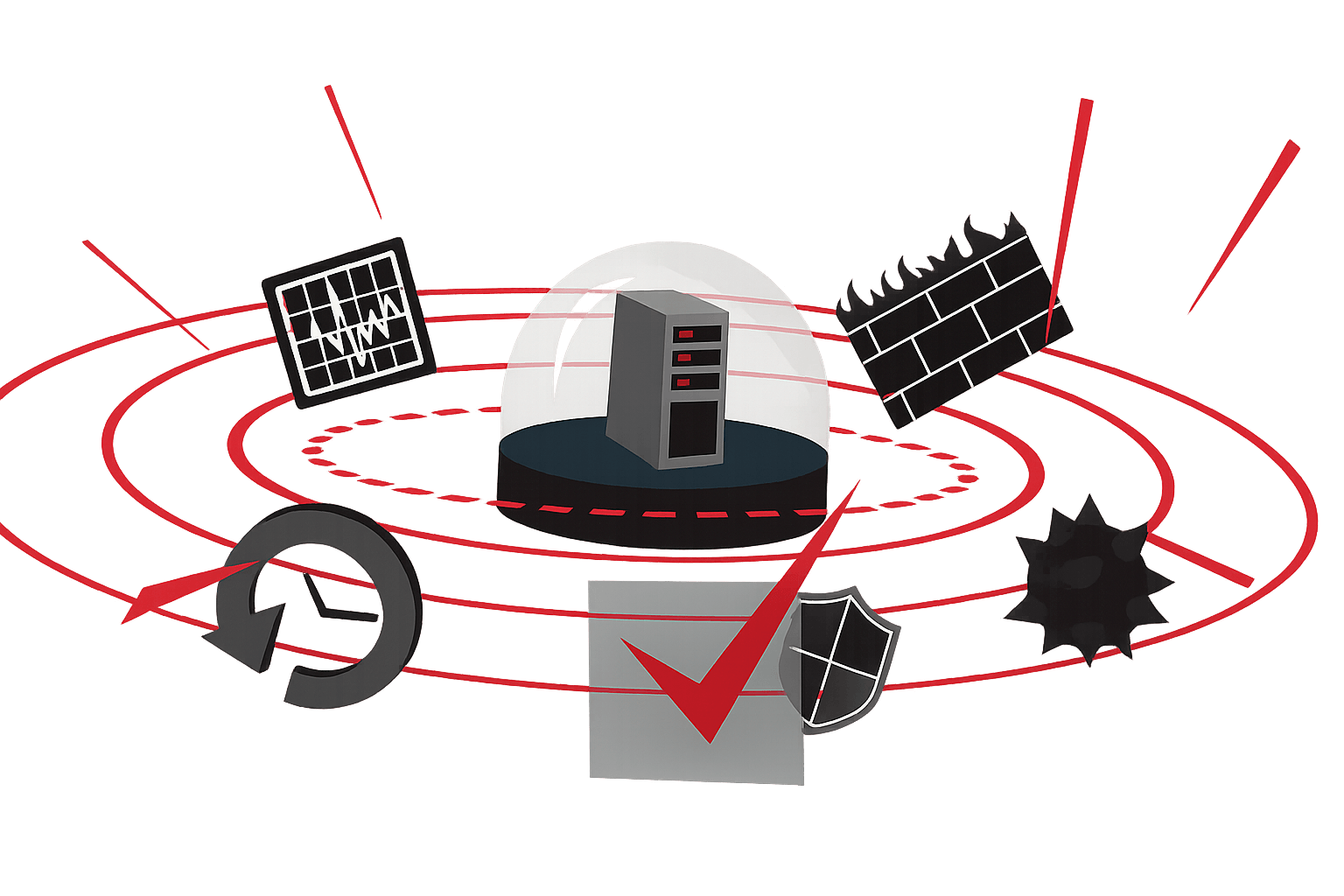
Why teams choose this path
Why Hybrid?
Performance & Predictability
Private links avoid the "best effort" public internet, so latency and jitter stay consistent for apps and data jobs.
Cost Control
Right-sized circuits and private endpoints cut surprise egress/NAT/inter-region charges.
Compliance & Residency
Keep sensitive data off the public internet with audited, private access paths.
Operating Reality
Most organizations already run across AWS, Azure, and Google; these patterns scale as you add regions and teams.
What we actually do
Service Towers
Each "tower" is a building block. Pick one or stack several—one team stays accountable.
Connectivity Core
Private lanes to AWS, Azure, and Google so traffic doesn't fight the public internet.
When video calls stutter, databases lag, or you move lots of data and need it steady.
Secure Landing Zone
The locks, keycards, and receptionist for your cloud—who gets in, to what, through private doors.
When you want Snowflake/Databricks/DBs reachable privately and audits to go quickly.
Data & API Integration
The plumbing that moves data reliably and the clean front desk (APIs) others can safely call.
When reports, analytics, and apps need the same truth without CSV chaos.
Resilience & Disaster Recovery
Spare tire, second route, and a practiced switchover—so you keep running when something fails.
When downtime is expensive or you must prove you can fail over.
Observability & SRE Operations
Smoke alarms, dashboards, and a pit crew on call—plus safe change windows.
When you want one team to watch, respond, and explain in plain English.
FinOps for Networked Workloads
An itemized phone bill for your cloud traffic—plus a copilot to keep it predictable.
When bills swing wildly or you're debating VPN vs dedicated links.
Proven patterns, not experiments
Reference Architectures
AWS Direct Connect + TGW + DXGW
Use when: You need to fan out to many VPCs and share services across regions.
Simple idea: One strong private lane in, then a hub that cleanly fans out to your apps.
Azure ExpressRoute + vWAN + FastPath
Use when: Large Azure hub-and-spoke estates need high throughput and centralized policy.
Simple idea: Big, central hub with lanes to every app network; the "fast lane" is enabled.
Google Cloud Interconnect + Cloud Router + HA VPN
Use when: You want private lanes plus a tidy backup route and automatic route updates.
Simple idea: A steady private lane and a standby VPN that's ready if needed.
Targets you can verify
SLO Targets (by design)
| Design Profile | Availability Target | Failover Target | Notes |
|---|---|---|---|
| Single POP / single provider | 99.9% | 10–30 s | One line in, conservative timers |
| Dual POP (same provider) | 99.95% | 3–10 s | Two sites/links, tuned fast detection |
| Dual provider + dual POP | 99.99% | ≤1–3 s | Different providers + diverse paths |
These are targets, not blanket guarantees. We measure your actual results during acceptance. Latency depends on distance and topology; we publish your baselines.
Keep popular SaaS off the public internet
Make SaaS Private
Snowflake & Databricks
Private access for steady ETL/BI throughput.
Salesforce Private Connect
Private, least-privilege flows between Salesforce and your VPC.
ServiceNow
ITSM traffic stays inside governed paths.
Transparent by design
Packages & Pricing
Core Connectivity
Includes:
- • Design & turn-up
- • Routing policy
- • Acceptance test
- • Runbook
Pass-through: Provider port hours, data transfer, cross-connects/fabric fees
Managed Connectivity
Includes:
- • 24×7 monitoring
- • 99.95–99.99% SLOs
- • Change windows
- • Quarterly failover tests
- • Capacity planning
Hybrid Integration
Includes:
- • API gateway
- • 3–10 integrations
- • Pipelines/streaming
- • Governance & dashboards
Note: Vendor licenses for API/ETL are pass-through
Cloud/provider/cross-connect fees are pass-through.
Calculate Your ROI
Estimate Costs and Savings
Estimate costs and savings for your hybrid setup.
Your Estimate
Formula: Base cost ($500) + data fees ($0.02/GB outbound). Up to 60% savings vs. public internet.
From call to cutover
Implementation Process
Discovery
90 minutes — We map your goals and traffic, then sketch the right pattern.
Design
You get a detailed diagram, bill of materials, security plan, and test plan.
Turn-up & Acceptance
We build it, run the tests in front of you, and hand over the runbook.
Operate & Optimize
We watch it 24×7, report SLOs monthly, and tune capacity.
Observed in the wild
Customer Stories
Financial SaaS
Dual private links to AWS; observed failover ~1–2 seconds; egress costs stabilized; monthly SLO report feeds exec reviews.
Healthcare Analytics
Azure vWAN + private endpoints for PHI; VPN tickets dropped sharply; DR rehearsals logged for audit.
Retail ML Feeds
Google Interconnect + Private Service Connect; steadier ETL to GPU cluster; FinOps guardrails prevented overruns.
Practical answers
FAQ
Start with proof
Ready to make hybrid predictable?
Book a 90-minute Architecture & Cost Review. You'll leave with a diagram, SLO targets, and a TCO model you can act on.